

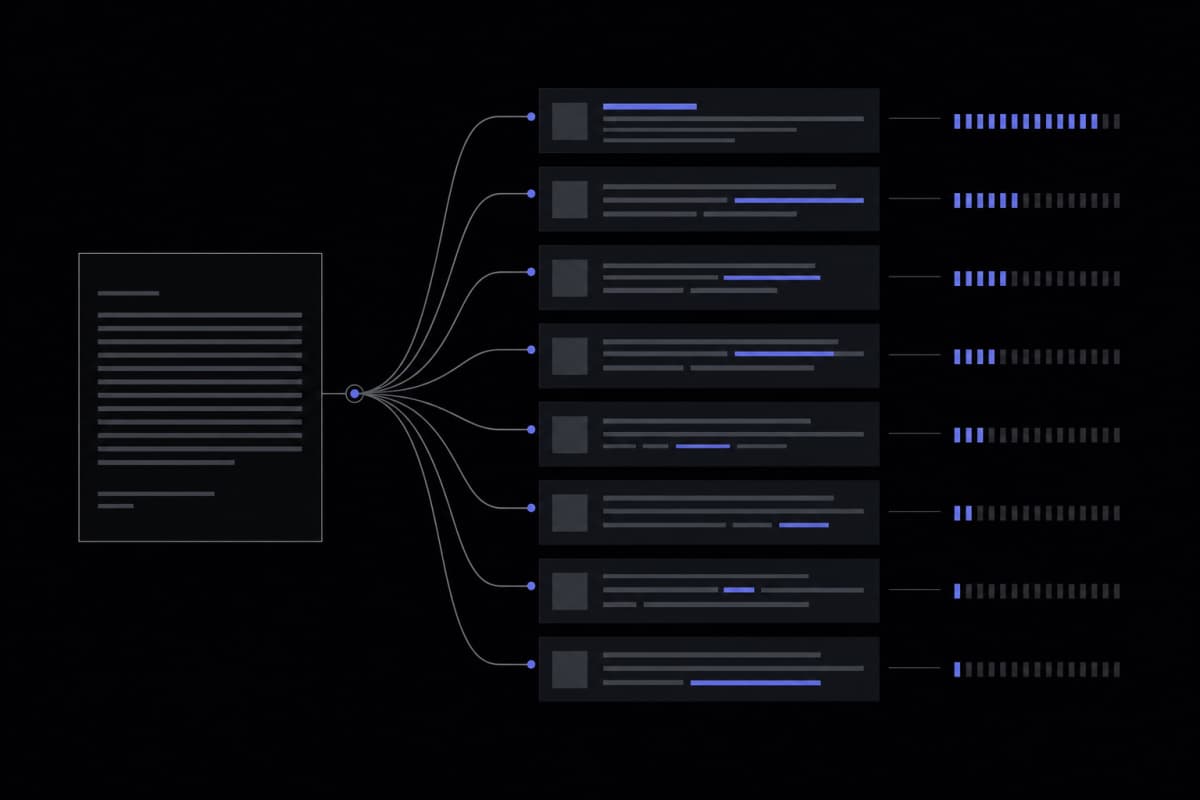
We fed 3 identical passages into 8 AI paraphrasers and scored every output on meaning, fluency, tone, and free-tier value. Here's what we actually found.
We fed three identical source passages — academic, marketing, and conversational — into eight AI paraphrasers and scored every output on the same four-point rubric: meaning preservation, fluency, tone flexibility, and free-tier value. QuillBot is still the most reliable all-rounder, Wordtune wins on sentence-level polish, and Jasper suits teams already paying for a full content suite. Our own Tools for Writing Paraphraser (disclosed upfront as ours) finishes mid-table with strong tone modes but a tighter free limit than QuillBot. No tool earned a perfect score, and every tool here, including ours, has at least one honest weakness worth knowing before you commit.
How We Tested: The Identical-Passages Methodology
We ran three standardised source passages through all eight tools in the same week of July 2026, using each tool's default free settings and then its best paid mode where available. Every output was scored independently by two editors on a 1–5 rubric across four criteria, then averaged. No tool received special treatment because we built it. AI models and pricing change often, so treat the scores and prices here as a snapshot of July 2026 — we re-test periodically, but always verify current features on each tool's own site.
The typical "best AI paraphraser" roundup goes something like this: a writer signs up for eight tools, pastes a sentence or two into each, and writes a paragraph of impressions based on first instinct. That's not a test — it's barely a first look. We wanted something you could actually reproduce, so we designed a repeatable methodology before we touched a single tool.
The Three Source Passages
Passage A — Academic: A 120-word excerpt from a publicly available research abstract on cognitive load theory. Dense, passive-heavy, and full of discipline-specific jargon. This is the hardest passage for any paraphraser because meaning sits in the precision of the language.
Passage B — Marketing: A 90-word product description for a fictional SaaS tool. Punchy, benefit-led, and intentionally written in a specific brand voice — second person, present tense, with one deliberate cliché baked in to see whether tools would preserve or flatten it.
Passage C — Conversational: A 75-word first-person blog paragraph explaining why someone switched from one project management app to another. Informal register, a few colloquialisms, and one run-on sentence included on purpose.
Each passage was pasted in exactly as written, with no pre-editing. We used each tool's default mode first, then the most "formal" or "standard" alternative mode where one existed. Screenshots of every output were saved for reference.
The Scoring Rubric
Two editors scored independently, then averaged. Scores ran from 1–5 on each criterion:
- Meaning preservation (MP): Does the output say the same thing the source said? A score of 5 means no semantic drift, no dropped clauses, no quietly invented details.
- Fluency (FL): Does it read naturally aloud? We read every output aloud. Stilted constructions, odd word choices, and broken idioms all cost points.
- Tone flexibility (TF): How many distinct modes does the tool offer, and do they actually sound different from one another?
- Free-tier value (FV): How much can you do before you hit a paywall? Word limits, daily caps, and feature locks all factor in.
One mistake reviewers commonly make is testing only the mode that flatters a tool most. We deliberately tested the default setting first, because that's what most users will actually encounter.
One caveat on precision: our scores come from two editors across three passages, so the decimals signal rank order and rough magnitude, not lab-grade accuracy. A 4.3 versus a 4.1 means "both strong, one slightly ahead here" — not that one tool is measurably 5% better. Read the scores as a guide, not a verdict.
A note on our own product: Tools for Writing's AI Paraphraser is included in this comparison and was scored on exactly the same rubric by the same two editors. We're disclosing the conflict of interest and letting the scores land where they land. You'll see it finish mid-table.
Identical-passage testing with a transparent rubric exposes gaps that first-impression reviews miss — especially on meaning drift in the academic passage, where several well-known tools quietly changed the source's argument.
The 4 Criteria That Separate Good AI Paraphrasers
The four criteria that consistently distinguish strong AI paraphrasers from weak ones are: meaning preservation, output naturalness, tone flexibility, and honest pricing relative to what the free tier actually allows. Tools that score well on all four are genuinely useful; tools that score well on only one or two tend to serve a narrow use case before frustrating everyone else.
1. Meaning Preservation
This is the criterion that matters most and gets tested least rigorously. Semantic drift — where the paraphrased version subtly changes what the original said — is surprisingly common. We saw it most in the academic passage: two tools changed "reduces" to "eliminates" in a sentence about cognitive load, which isn't a stylistic difference, it's a factual one. For students, journalists, or anyone working closely with source material, a tool that drifts is worse than useless. It introduces errors without flagging them.
The best tools preserve the logical structure of a sentence before they change its surface vocabulary. Weaker tools treat paraphrasing as synonym substitution — which is why their outputs sometimes read like a thesaurus-happy first draft.
2. Output Naturalness (Fluency)
Reading outputs aloud is the fastest way to catch bad paraphrasing. Fluency problems tend to cluster around three habits: awkward preposition choices ("the study is concerning the effects"), overlong nominalizations ("the demonstration of the capability of the system"), and register mismatches where the tool slips from formal to casual mid-sentence. A high fluency score means we could paste the output directly into a document without immediately needing to rewrite it.
What's easy to miss is that fluency and meaning preservation are often in tension. Tools that score very high on fluency sometimes achieve it by simplifying or writing around complex ideas rather than through them.
3. Tone Flexibility
The number of modes a tool offers isn't the same as genuine tone range. QuillBot lists seven modes; in our test, several of them produced outputs that were hard to tell apart without a close side-by-side comparison — the "Creative" mode, in particular, wasn't meaningfully more creative than "Standard" on our passages. These observations reflect our specific test passages and conditions; results may differ on other content types.
Genuine tone flexibility means the tool can serve a law school student and a TikTok copywriter from the same source paragraph. Very few tools in this comparison actually managed that.
4. Pricing and Free-Tier Limits
Free tiers vary enormously. Some tools give you a generous daily word limit with all modes unlocked; others lock their best modes behind a paywall after a single paragraph. We evaluated each free tier on whether a real user — a student writing an essay, a marketer refreshing a product page — could complete a meaningful task without paying. We also looked at whether paid plans represent genuine value or are mainly structured to push you off the free tier as quickly as possible.
Honestly, most free tiers are designed as demos, not working tools. The ones that function as genuine free tools are noted clearly in the pricing section below.
Meaning preservation is the criterion most reviews skip and the one that matters most for academic and professional use — a fluent output that changes the source's meaning is an error generator, not a writing aid.
The 8 Tools Compared at a Glance
The eight tools in this comparison span dedicated paraphrasers, full AI writing suites, and integrated grammar-and-style tools. The table below shows each tool's average rubric scores from our identical-passage test, its main modes, and its free-tier limit. Scores reflect our specific test conditions; see the methodology section for full context.
A quick note on how to read the scores: these are averages across all three passages and both editors. A tool that scores 4.2 on meaning preservation but 2.8 on fluency will suit very different work than one with the reverse profile. Scan the row that matches your main use case rather than just looking for the highest total. Pricing figures are approximate at time of testing — verify current prices on each tool's site before buying.
| Tool | Meaning (MP) | Fluency (FL) | Tone Modes | Free Tier | Starting Price (approx.) | Best For |
|---|---|---|---|---|---|---|
| QuillBot | 4.3 | 4.1 | 7 modes | Short runs, 3 modes | ~$8/mo (annual) | Students, general use |
| Wordtune | 3.9 | 4.4 | Casual/Formal + Shorten/Expand | 10 rewrites/day | ~$10/mo | Sentence-level polish |
| Jasper | 3.7 | 4.0 | Tone-by-brand | None (trial only) | ~$39/mo | Marketing teams |
| Grammarly | 4.0 | 4.2 | Clarity / Tone adjust | Limited AI credits, reset monthly | ~$12/mo | Business writing |
| Rytr | 3.5 | 3.8 | 20+ tones | 10,000 chars/mo | ~$9/mo | Budget content creators |
| Paraphraser.io | 3.4 | 3.6 | 5 modes | 600 words/run | ~$7/mo | Free-tier heavy users |
| Tools for Writing (ours) | 3.8 | 3.9 | Standard / Formal / Creative / Shorten | Monthly limit (signed-in trial) | $9.99/mo (Pro) | Writers wanting a broader toolkit |
| Copy.ai | 3.6 | 3.9 | Brand voice | 2,000 words/mo | ~$36/mo | Content teams, repurposing |
Tool-by-Tool Teardown with Sample Outputs
Each tool below is assessed on its actual output from our academic passage (Passage A), along with its real strengths and at least one concrete weakness we observed. The sample rewrites are direct outputs from each tool with no post-editing.
The original academic passage we fed every tool read as follows:
"Cognitive load theory suggests that instructional design should account for the limited capacity of working memory. When learners are exposed to extraneous cognitive load — caused by poor instructional design rather than the inherent complexity of the material — their ability to form durable long-term memories is reduced."
QuillBot
Sample output (Standard mode): "According to cognitive load theory, instructional design should take working memory's limited capacity into account. When students are subjected to extraneous cognitive load — the result of poor instructional design rather than the material's inherent difficulty — their capacity to create lasting long-term memories diminishes."
Strengths: Highest meaning preservation score in our test (4.3). QuillBot's synonym slider is a genuinely useful feature: nudging it toward "fewer changes" keeps the output close to the source, which is exactly what academic paraphrasing requires. The Google Docs and Word integrations work reliably and save real time in a document workflow.
Weakness: The free tier caps runs at a short word limit, which gets awkward fast for anyone working with longer paragraphs. Several of QuillBot's seven modes also produce outputs that are frustratingly hard to tell apart — the "Creative" mode, in particular, wasn't meaningfully more creative than "Standard" on our passages.
QuillBot is the default recommendation for a reason, and it earns that position on meaning preservation. If you're exploring QuillBot alternatives, the reason is usually pricing, word limits, or a specific need for better tone control.
Wordtune
Sample output (Formal mode): "Cognitive load theory holds that instructional design must account for the constraints of working memory. Exposure to extraneous cognitive load — arising from poor instructional design rather than the complexity inherent to the content — impairs learners' capacity to consolidate information into durable long-term memory."
Strengths: Best fluency score in the test (4.4). Wordtune operates sentence by sentence rather than on full paragraphs, which means you have tighter editorial control over what changes and what stays. The Formal/Casual split actually produces noticeably different outputs, unlike several tools that label modes without delivering distinct results.
Weakness: That sentence-by-sentence approach becomes tedious when you need to paraphrase a full page. It's better thought of as a rewriting assistant than a bulk paraphraser. Meaning drift also crept in more than we expected on the academic passage — some runs quietly dropped the "inherent complexity" nuance entirely.
Jasper
Sample output (default mode): "Research into cognitive load suggests that how we design learning experiences matters enormously. When students face unnecessary cognitive burden — not because the subject is hard, but because the materials are poorly structured — they struggle to retain what they've learned."
Strengths: Jasper's brand voice feature is genuinely powerful for marketing teams that need paraphrased output to stay on-brand. If you're already paying for Jasper as a content suite, using it for paraphrasing is a reasonable extension of that investment.
Weakness: That academic output should concern any researcher or student. Jasper simplified the passage significantly and lost the specific mechanism — "limited capacity of working memory" became a vague "struggles to retain." For anything requiring precision, Jasper is the wrong tool. Its pricing also starts around $39/month with no functional free tier, which is a steep ask for a feature that stronger dedicated paraphrasers offer at a fraction of the price.
Grammarly
Sample output (Rephrase): "Cognitive load theory argues that instructional design must account for working memory's limited capacity. Extraneous cognitive load — created by poorly designed instruction rather than the material's complexity — reduces a learner's ability to form lasting memories."
Strengths: Clean output with solid meaning preservation (4.0). Grammarly's real advantage is that paraphrasing sits inside a grammar and style workflow, so your rewrite gets a grammar pass almost automatically. For business writing where clarity and correctness matter equally, that combination is efficient.
Weakness: GrammarlyGO's free credits are a confusing system — users frequently hit their limit mid-document with no clear indication of how many uses remain. Paraphrasing is also less central to Grammarly's identity than grammar checking, which means it receives less development attention than dedicated paraphrasers. If paraphrasing is your primary need, you're paying Grammarly's premium prices for what is essentially a secondary feature.
Rytr
Sample output: "Cognitive load theory states that instructional design needs to consider the limited working memory capacity. When learners encounter extraneous cognitive load due to ineffective instructional design rather than the complexity of the content, it becomes harder for them to form long-term memories."
Strengths: Rytr's free monthly character allowance is one of the more generous in this comparison. Its 20-plus tone labels cover a wide range, and the pricing is accessible for individual creators who need occasional paraphrasing alongside other content tasks.
Weakness: The output reads competently but without much refinement. Rytr's paraphrasing feels like a lightly trained layer on top of a general-purpose text generator — adequate for blog content, noticeably flat for anything requiring nuance. "It becomes harder for them to form long-term memories" is a real simplification of the original's more precise claim about how memory formation is impaired.
Paraphraser.io
Sample output (Standard mode): "Cognitive load theory proposes that instructional design ought to consider working memory's limited capacity. Learners who face extraneous cognitive load — the product of flawed instructional design, not the material's inherent difficulty — find their ability to build lasting long-term memories is weakened."
Strengths: The 600-word per-run free limit is the most generous word ceiling in the comparison for free users. A basic plagiarism checker is included, which is useful for students who want a quick sense of whether their paraphrase is still too close to the source. It's a working free tool in a way many free tiers simply aren't.
Weakness: The outputs are consistent but rarely elegant. The tool heavily favours near-synonym swaps over genuine structural rewrites, which means passages with complex syntax come out sounding slightly awkward. The interface also displays ads on the free tier, which slows down the workflow.
Tools for Writing (our tool — disclosed)
Disclosure: Tools for Writing is our product. The score below was applied by the same two editors using the same rubric. We're telling you upfront because you deserve to know, and because a fair comparison is more useful to you than a convenient one.
Sample output (Standard mode): "Cognitive load theory holds that instructional design must account for the limited capacity of working memory. When learners encounter extraneous cognitive load — stemming from poor instructional design rather than the complexity of the subject matter — their capacity to build durable long-term memories decreases."
Strengths: The output preserves the core mechanism well (3.8 MP). The four available modes — Standard, Formal, Creative, and Shorten — produce genuinely distinct outputs on the marketing passage, and the Shorten mode is one of the better implementations we tested. The paraphraser sits inside a broader suite, so you can move to a grammar check or readability review without switching tabs.
Weakness: The free monthly limit is tighter than Paraphraser.io's free offering, which makes it less practical for students working through a large document without upgrading. Our fluency score (3.9) is solid but not class-leading — Wordtune and QuillBot both produce smoother outputs on the academic passage. The tool is also newer, which means it has less community testing behind it than QuillBot's years of iteration.
Copy.ai
Sample output: "Cognitive load theory tells us that good instructional design needs to respect the limits of working memory. Extra cognitive burden caused by clunky design — not by the subject's difficulty — gets in the way of long-term learning."
Strengths: Copy.ai shines in marketing content repurposing — it's genuinely good at taking a product description and reworking it for a different channel or audience. The brand voice feature, like Jasper's, is a real differentiator for content teams with established style guides.
Weakness: That academic output is a problem. "Clunky design" isn't a paraphrase of "extraneous cognitive load caused by poor instructional design" — it's an informal rewrite that loses disciplinary specificity entirely. Copy.ai's default register trends conversational regardless of input, which works for social copy and fails for anything technical or academic. At around $36/month, it's priced as a content suite, not a paraphraser, and if paraphrasing is your only need, you're paying for features you won't use.
The academic passage was the great differentiator: tools built primarily for marketing (Jasper, Copy.ai) simplified or wrote around the technical content rather than through it, while QuillBot and Grammarly preserved meaning most faithfully.
Which Tool Fits Which Job: Recommendations by Use Case
The best AI paraphraser for a student writing a literature review is not the same as the best one for a marketer refreshing a landing page. Use-case fit matters more than aggregate score — here are honest recommendations based on what each tool actually does well.
This is the section most comparison articles get wrong. They label a tool "best for students" because it has a free tier, or "best for SEO" because the company said so in a press release. These recommendations are based on what we actually observed in the test outputs.
Students and Academic Writers: QuillBot
QuillBot earns this recommendation on the strength of its meaning preservation score and its synonym slider, which lets you control how far from the source the output drifts. For literature reviews, annotated bibliographies, and discussion sections, meaning drift is a serious risk — you can't afford a tool that quietly changes "reduces" to "eliminates." The Google Docs integration also helps if you write your papers there.
One important caveat: paraphrasing tools don't remove the need for citations. If the idea came from a source, you cite the source — even if you rewrote every word. Using a paraphrasing tool to obscure borrowed ideas is academic misconduct regardless of how fluent the output is.
Marketers and Content Teams: Jasper or Copy.ai (with conditions)
If you're already paying for Jasper or Copy.ai as your primary content tool, their paraphrasing features are good enough for marketing copy and will save you switching costs. If you're buying a tool specifically for paraphrasing marketing content, neither justifies the price premium over QuillBot or Wordtune.
For content teams refreshing older blog posts, Wordtune's sentence-level approach works well: you can move through a page paragraph by paragraph, rewriting selectively rather than running the whole thing through a bulk paraphraser and losing your original voice in the process.
Non-Native English Speakers: Wordtune or Grammarly
Wordtune's Formal mode produces the most consistently natural English in our tests, which makes it useful for non-native speakers who need their writing to read idiomatically rather than just grammatically. Grammarly pairs paraphrasing with grammar correction in one pass, which cuts down the number of editing steps needed.
For writers working in languages other than English, most tools in this comparison claim multilingual support, but quality varies significantly. QuillBot and Paraphraser.io have the broadest language coverage, though testing a sample paragraph on the free tier before committing to a paid plan is advisable — the quality gap between English and other languages can be substantial depending on the tool.
Editors and Professional Writers: Wordtune or Tools for Writing
Editors typically need paraphrasing for specific, targeted tasks: rewording a clunky sentence, simplifying a technical explanation for a general audience, or tightening a passage that runs long. For that kind of selective, sentence-level work, Wordtune's interface is well suited. Tools for Writing's Paraphraser works well when you want the paraphrasing step to sit inside a broader editing workflow — moving from paraphrase to grammar check to readability analysis without leaving the suite reduces friction on a full editing pass.
What most editors want is control, not automation. The best paraphrasers for professional editing are the ones that give you options rather than a single output — so favour tools with multiple modes and enough free-tier headroom to work through a full document section.
Budget Users Who Need a Working Free Tool: Paraphraser.io
If you need a free tool that actually lets you complete real tasks without hitting a word wall after two sentences, Paraphraser.io's 600-word free run limit is the most functional in the comparison. The outputs are adequate, not excellent, but for occasional use without a paid plan, it's the honest recommendation.
Match the tool to the passage type: academic writing needs high meaning preservation (QuillBot), marketing needs tone flexibility (Jasper/Copy.ai inside a paid suite), and professional editing benefits from tools that fit a broader workflow rather than standing alone.
Honest Pricing Comparison: Free Tiers vs. Paid Plans
Free tiers across these eight tools range from a fully functional working limit (Paraphraser.io's 600 words per run) to a credits-based system that runs out mid-document (GrammarlyGO). The table below compares what you actually get for free and what paid plans unlock. All prices are approximate at time of testing — verify current pricing on each tool's own site before buying.
| Tool | Free Tier Details | Paid Plan (approx. starting price) | What Paid Unlocks |
|---|---|---|---|
| QuillBot | Short runs per attempt, 3 modes | ~$8/mo (annual) | Unlimited words, all 7 modes, faster processing |
| Wordtune | 10 rewrites/day, all core modes | ~$10/mo | Unlimited rewrites, AI writer features |
| Jasper | 7-day trial only, no permanent free tier | ~$39/mo | Full suite — paraphrasing is one feature among many |
| Grammarly | AI credits (limited, reset monthly) | ~$12/mo | More AI credits, all tone suggestions, plagiarism checker |
| Rytr | 10,000 characters/month | ~$9/mo | Higher monthly allowance (Saver), unlimited (Unlimited plan) |
| Paraphraser.io | 600 words/run, with ads, 5 modes | ~$7/mo | Longer runs, no ads, plagiarism checker, more modes |
| Tools for Writing (ours) | Monthly usage allowance when signed in; free to try all AI tools | $9.99/mo (Pro) | Higher monthly limits on all AI tools in the suite |
| Copy.ai | 2,000 words/month | ~$36/mo | Unlimited words, brand voice, multi-user workspace |
A few things worth flagging that the table can't fully capture:
QuillBot's free tier is functional for short tasks but genuinely frustrating for anything longer than a paragraph. The per-run word cap means students working on a multi-page paper will hit the wall constantly. The paid plan is one of the better value propositions in the comparison if you use it regularly.
Rytr's free tier is genuinely usable for light monthly use. Ten thousand characters is roughly enough for several paraphrasing tasks per month before you need to consider paying.
Jasper and Copy.ai are content suites, not paraphrasers. Evaluated purely on paraphrasing value per dollar, they're poor value. Evaluated as full content platforms where paraphrasing is one of many features you use, the pricing calculus changes.
For a deeper look at how plagiarism checkers stack up across some of these same tools, see our Grammarly Plagiarism Checker vs 6 Alternatives comparison.
Frequently Asked Questions
What is an AI paraphraser and how does it work?
An AI paraphraser is a tool that uses a language model to rewrite text in different words while preserving the original meaning. Most tools work by encoding the input text, identifying the semantic intent, and generating an output using different vocabulary and sentence structures. Quality varies considerably between tools — some use basic synonym substitution, while better tools restructure clauses and adjust tone based on the mode you select.
Are AI paraphrasing tools safe to use for academic writing?
They can help you rework sentences for clarity and reduce repetition, but they don't make source material yours. If the underlying idea came from a source, you still need to cite it — paraphrasing without attribution is plagiarism regardless of whether a tool rewrote the words. Always check your institution's policy on AI tools before using one in submitted work, as policies vary significantly between universities.
Can AI paraphrasers fully avoid plagiarism detection?
No. Paraphrasing tools change surface-level wording but don't change the underlying ideas, arguments, or structure of a source — and modern plagiarism checkers increasingly detect paraphrased similarity, not just exact matches. Using a paraphraser to disguise copied ideas without citation is still academic misconduct. Running a plagiarism checker on your own output can give you a sense of how similar it remains to web sources, but it's not a substitute for proper attribution.
Which tools are the strongest QuillBot alternatives?
Wordtune is the strongest alternative for sentence-level fluency and editorial control. Paraphraser.io offers the most generous free word limit if cost is the priority. Grammarly is the best alternative if you want paraphrasing inside a grammar-and-style workflow. For teams already using a content suite, Jasper or Copy.ai provide paraphrasing as part of a broader platform, though neither justifies their price as a dedicated paraphrasing tool.
Do AI paraphrasing tools work in languages other than English?
Many tools claim multilingual support, and QuillBot and Paraphraser.io have the broadest language coverage among the eight tools we tested. Output quality in non-English languages is generally lower than in English, and the gap varies significantly by language. Testing a sample paragraph in your target language on the free tier before committing to a paid plan is advisable.
Is it legal to use an AI paraphrasing tool?
Using an AI paraphraser is legal in most contexts. The legal and ethical risks arise from how you use the output: submitting AI-paraphrased work as original academic writing may violate your institution's academic integrity policy, and using paraphrased content in commercial contexts without verifying originality could raise intellectual property issues. Transparency about AI use is increasingly expected and, in some professional contexts, required.
How do I know if a paraphrased output has changed the original meaning?
Read the output against the source with specific attention to hedging language, quantifiers, and causal claims — these are the places where meaning drift appears most often. Words like "reduces" versus "eliminates," or "may" versus "will," carry significantly different meanings. The most reliable check is reading both versions aloud and asking whether the output makes the same claim the source made.
This article was drafted with AI assistance, fact-checked against primary sources, and reviewed by our editorial team before publishing. How we use AI.