

60 oxymoron examples grouped by purpose, a crisp breakdown of oxymoron vs paradox, and a 3-signal Freshness Audit to cut dead figures from your writing.
An oxymoron is a two-word figure of speech that pairs contradictory terms to create a new, layered meaning — think deafening silence or bittersweet. Not every contradiction qualifies: the words must clash and still make sense together. This guide covers 60 categorized examples, explains exactly how oxymorons differ from paradoxes and antithesis, and includes an original Freshness Audit — with a worked draft example — to help you tell a living figure from a dead cliché.
Search for this topic and you'll usually land on a list of 80 examples with almost no explanation of why any of them work. Most resources treat the catalogue as the answer. This guide takes a different approach: it breaks down what actually makes a phrase qualify rather than just contradict, gives you 60 examples sorted by purpose, and offers a concrete audit tool for deciding whether a figure of speech is earning its place in your prose or just occupying space.
What Makes a True Oxymoron — The Two-Word Contradiction Rule and Why "Civil War" Isn't Really One
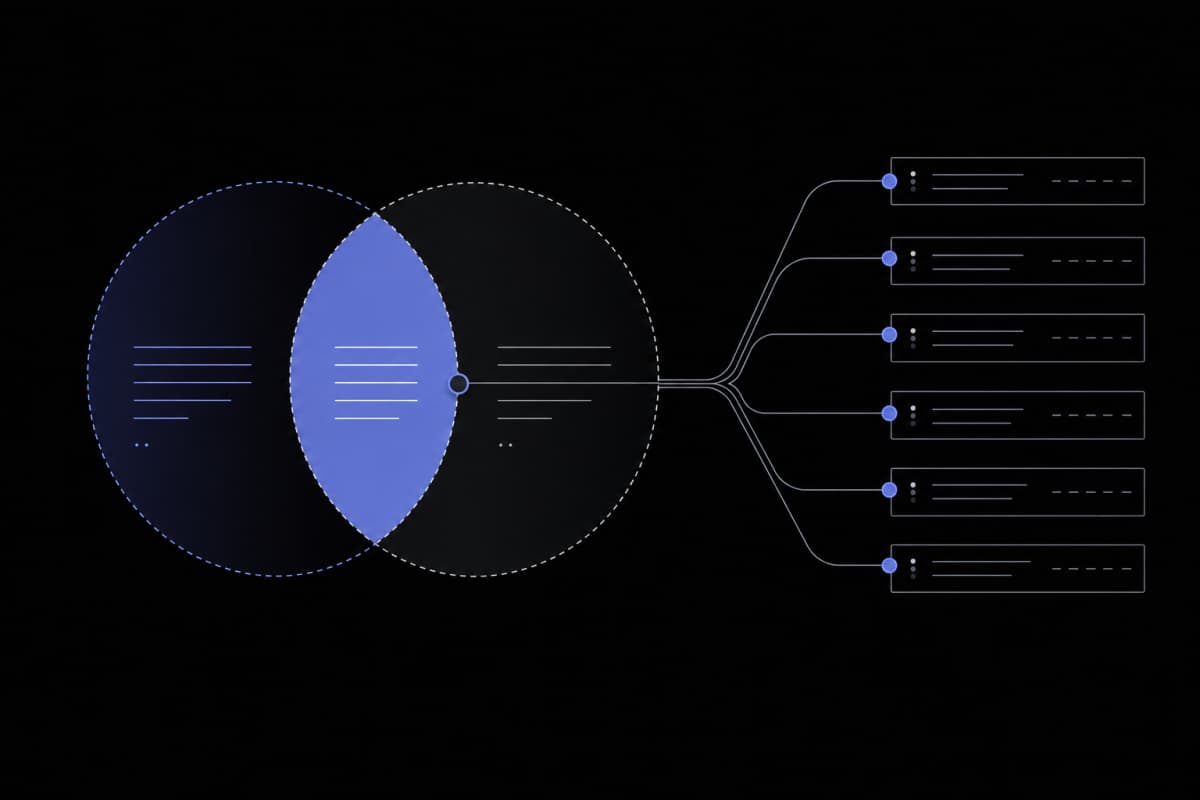
A true oxymoron is a figure of speech that places two contradictory or semantically opposite words directly beside each other to generate a third, more nuanced meaning — one that neither word carries alone. The contradiction must be intentional and productive: the clash creates meaning rather than cancelling it out.
The word itself is a clue. Oxymoron comes from the Greek oxys ("sharp") and moros ("dull" or "foolish") — making it, in its very structure, a self-description. That built-in irony signals that the device is supposed to feel paradoxical from the inside out.
The most common structural pattern is adjective + noun: deafening silence, living dead, open secret. You'll also find adverb + adjective constructions like seriously funny or awfully good, and a handful of single compressed words — bittersweet, spendthrift — that fuse opposites into one lexical unit. What matters isn't the grammatical form; it's the semantic collision.
Here's the test most guides skip: a true oxymoron must create meaning, not just confusion. "Round square" is a logical impossibility — it doesn't describe anything real, emotional, or metaphorical. "Deafening silence," on the other hand, perfectly captures the oppressive quality of a room gone suddenly quiet. Both words stay contradictory; neither one wins. That productive tension is what makes the device function as rhetoric rather than error.
Why "civil war" doesn't quite make the cut
Civil once meant "of citizens" (from Latin civilis), not "polite." So "civil war" was always a war among citizens — not a genteel conflict. The apparent contradiction is a modern misreading, born from civil acquiring a second meaning over centuries. The phrase doesn't ask a reader to reconcile opposite ideas; it describes a type of conflict. Same problem with friendly fire: grimly ironic, yes, but "friendly" refers to the source of the fire, not its nature. These are better classified as accidental irony than deliberate figures of speech.
The practical takeaway: before calling something an oxymoron, ask whether the contradiction is semantic (the words genuinely mean opposite things) and purposeful (the clash produces a richer idea than either word alone). If both answers are yes, you have one. If only one is, you probably have irony, coincidence, or cliché.
For a broader look at how this device fits alongside others, see our guide on figurative language examples every writer needs — it puts oxymorons in context with metaphor, simile, and personification.
A true oxymoron requires both semantic contradiction and productive meaning — the clash must generate insight, not just confusion. "Civil war" fails this test because "civil" originally meant "of citizens," not "polite."
60 Examples Grouped by Use
These figures appear across everyday speech, literature, sarcasm, romance, and professional writing. Grouping them by function reveals how the same device shifts in tone depending on context — playful in one sentence, devastating in another.
Everyday (you say these without thinking)
- Jumbo shrimp
- Open secret
- Original copy
- Alone together
- Pretty ugly
- Old news
- Working vacation
- Exact estimate
- Minor miracle
- Clearly confused
- Act naturally
- Organized chaos
Literary and emotional
- Bittersweet
- Deafening silence
- Joyful sadness
- Good grief
- Painful pleasure
- Dark light
- Sweet sorrow
- Intense apathy
- Hopeful despair
- Peaceful chaos
- Cruel kindness
- Tender brutality
Sarcastic and comedic
- Seriously funny
- Awfully good
- Terribly nice
- Definite maybe
- Clearly misunderstood
- Accidentally on purpose
- Passive aggression
- Genuine imitation
- Controlled accident
- Deafening quiet
- Freezing hot
- Dull roar
Romantic and relationship
- Loving hate
- Tough love
- Heartbreaking joy
- Distant closeness
- Familiar stranger
- Sad smile
- Beautiful disaster
- Fearless worry
- Broken wholeness
- Cold warmth
- Silent conversation
- Honest lies
Business, tech, and accidental
- Virtual reality
- Artificial intelligence
- Unbiased opinion
- Advanced beginner
- Mandatory option
- Constant variable
- Free market (contested)
- Liquid crystal
- Wireless cable
- Instant classic
- Managed chaos
- Standard deviation
A note on that last group: some of these are "accidental" in the sense that the people who coined them weren't reaching for rhetorical effect — they were naming things. Virtual reality is the clearest case: it entered the language as a technical label, not a figure of speech, but it carries genuine oxymoronic tension once you pull the words apart. In a poem, "virtual reality" might earn its place as a charged phrase. In a technical brief, it's just jargon.
The same device can be playful, devastating, romantic, or purely accidental. Knowing which type you're using is the first step to using it well.
Oxymoron vs Paradox vs Antithesis — Crisp Differences with Side-by-Side Examples
An oxymoron is a compressed two-word contradiction. A paradox is a sentence or idea that seems self-contradictory but contains a deeper truth. Antithesis sets two opposing ideas in parallel structure. They're related but not interchangeable — confusing them is one of the most common errors in rhetorical analysis.
| Device | Scale | Core Function | Example |
|---|---|---|---|
| Oxymoron | Two words, side by side | Fuses opposites into a new meaning | Deafening silence |
| Paradox | Sentence or idea | Appears contradictory but reveals truth on examination | "I must be cruel only to be kind" (Hamlet) |
| Antithesis | Clause or sentence pair | Balances opposing ideas in deliberate parallel | "It was the best of times, it was the worst of times" |
| Irony (verbal) | Phrase or sentence | Intended meaning differs from literal wording | Calling a clumsy person "graceful" — the speaker means the opposite |
A useful shortcut for oxymoron vs paradox: if you can point to two specific words doing the work, it's probably an oxymoron. If you need an entire clause to feel the contradiction, it's likely a paradox. "Sweet sorrow" — two words, immediate tension: oxymoron. "The more you know, the more you realize you know nothing" — that requires unpacking a whole logical loop: paradox.
What about antithesis?
Antithesis often gets lumped in with oxymoron, but it's structurally different. Dickens' "It was the best of times, it was the worst of times" doesn't merge the two ideas — it holds them apart in deliberate parallel. The reader feels the gap between them. An oxymoron collapses that gap; antithesis preserves and amplifies it. Both are powerful. They just do opposite things to the reader's sense of resolution.
Note on irony: a situation can be ironic — a fire station burns down — with no language contradiction at all. Verbal irony is specifically a linguistic choice; situational irony is a circumstance. Oxymorons can produce an ironic effect, but the device lives in word choice, not in what happens.
In Shakespeare and Modern Literature — What Contradiction Signals About a Character
Shakespeare used oxymorons more densely than almost any writer before or since, particularly to signal emotional overload — a character who has run out of single-register language and needs contradiction to express what they feel. In modern literature, the same device compresses irresolvable complexity into a phrase readers carry with them.
In Act I of Romeo and Juliet, Romeo delivers a cascade of contradictory pairs after first encountering the feud's violence:
"O brawling love, O loving hate, / O anything, of nothing first create! / O heavy lightness, serious vanity, / Misshapen chaos of well-seeming forms, / Feather of lead, bright smoke, cold fire, sick health…"
This isn't decorative. Shakespeare stacks contradiction on contradiction to show a young man whose emotional vocabulary is genuinely breaking down. He can't describe what he feels because what he feels is contradictory — infatuation mixed with doom, excitement tangled with dread. The density of the device maps directly onto the density of Romeo's confusion.
Later in the same play, Juliet's "Parting is such sweet sorrow" is far more controlled — one compressed contradiction, precisely placed. By that point she understands her situation better than Romeo does. A single compound phrase captures her grief and anticipation at once. The restraint is the point.
A modern fiction example: Kazuo Ishiguro's Never Let Me Go
Ishiguro's narrator, Kathy H., recounts a disturbing reality in calm, accepting, almost serene language — and the gap between that placid voice and the horror it slowly reveals is exactly where the tension lives. The contradiction isn't packed into neat two-word figures; it sits in the mismatch between tone and content, accumulating quietly until readers feel the wrongness before they can articulate it. Ishiguro lets that sentence-level dissonance do the work the plot only confirms much later. A character who narrates dread in contented tones is almost always one who knows something they can't yet say plainly — or who has been trained not to.
Oxymorons in titles and pop culture
Film and book titles exploit contradiction because they generate instant intrigue. True Lies (1994) doesn't need a tagline — the title is already doing rhetorical work. Living Dead fuses biological impossibility with social commentary. Terms like magic realism and tragicomedy have become genre labels, which is a sign that the device has done its job so thoroughly it became a category.
Fresh vs Dead — The Freshness Audit
A figure of speech loses its tension when readers stop noticing the contradiction. Once a phrase is processed automatically — like "bittersweet" or "open secret" — the semantic clash no longer fires. The device becomes a cliché: structurally intact, functionally inert.
The Oxymoron Freshness Audit applies three signals to any phrase before you commit to it.
The Three-Signal Test
Signal 1 — The Pause Test. Read the phrase to someone unfamiliar with your draft. Do they pause, even briefly? A living figure creates a micro-hesitation — the brain has to reconcile the contradiction. If the reader processes it without friction, the tension is gone. "Bittersweet" slides through without resistance for most readers. "Joyful dirge" still snags.
Signal 2 — The Dictionary Test. Look up both words. If the phrase itself appears as a usage example in a major dictionary entry, it has been fully absorbed into the language and is no longer asking the reader to do work. "Deafening silence" now appears in examples across major dictionaries as an idiom — a sign it may be coasting on habit.
Signal 3 — The Substitution Test. Replace the figure with a plain description. If the plain version loses almost nothing, the original wasn't adding much.
Worked example: auditing a real draft sentence
Consider this sentence from a travel essay draft: "We arrived to a deafening silence — the village had emptied overnight."
Signal 1 (Pause): Most readers process "deafening silence" without hesitation. No pause — the phrase has become idiom.
Signal 2 (Dictionary): "Deafening silence" appears as a listed example in multiple major dictionaries. Absorbed.
Signal 3 (Substitution): Swap it out: "We arrived to find the village completely quiet — it had emptied overnight." The plain version loses almost nothing. The figure was coasting.
Verdict: dead. Retire or refresh.
A refreshed version: "We arrived to a silence so total it had weight — the village had emptied overnight." This earns the contradiction rather than borrowing a worn phrase. The revision took thirty seconds and the sentence is now doing real work.
Now apply the same test to a fresher candidate: "Her apology was a tender brutality."
Signal 1: Most readers pause — "tender" and "brutality" don't resolve automatically. Pause present.
Signal 2: Not a dictionary idiom. Not absorbed.
Signal 3: Plain substitute — "Her apology was kind but devastating" — loses real texture. The figure is doing work the plain version can't replicate.
Verdict: fresh. Keep it.
What to do with a dead figure
Three options: retire it (swap for a plain description), refresh it (find a less-worn version of the same idea), or use it deliberately in dialogue where a character reaching for a cliché reveals something about their evasiveness. That last move is a characterization choice, not a craft default.
Refreshing a tired figure is mostly a rewording problem, and it helps to see several alternative phrasings side by side before you commit to one. Our free Paraphrasing Tool can generate reworded variants of a sentence in seconds — run the candidates back through the Pause and Substitution tests above and keep whichever version actually earns its contradiction.
Apply the Three-Signal Test — Pause, Dictionary, Substitution — before committing to any figure of speech. A dead one doesn't just fail to impress; it signals lazy writing. The worked example above shows the audit takes under a minute per phrase.
Using Contradiction in Copy and Headlines
Contradictory phrasing works in headlines and advertising copy because the brain notices a semantic mismatch before it fully processes the meaning, briefly raising attention. That extra moment of engagement is what good headline writing is built on — and you can test it directly in your own drafts.
Read these two headlines:
- "Our coffee is very good."
- "Our coffee is seriously good."
The second version uses an adverb ("seriously") that subtly contradicts the casual implication of "good." It's a soft version of the device, but the friction makes it stick. Scale that up and the effect sharpens: Awfully Good Pizza. Brutally Simple Design. Brilliantly Dumb Fun. Each of these headline formulas earns attention because they won't resolve cleanly on first read.
Journalism uses the same trick. "The Honest Liar" as a profile headline. "The Loudest Silence in the Senate Chamber." These phrases stop a scanning reader because the contradiction demands resolution — and resolution requires reading further.
Practical rules for copy
The contradiction needs to earn its place. If your product is genuinely simple but surprisingly effective, "brutally simple" works. If you're just reaching for a clever phrase that doesn't reflect anything real about the product, readers sense it — and distrust the whole message.
Keep the figure close to its subject. "Our remarkably ordinary pasta sauce" puts the tension right on the noun. "Our pasta sauce is, in many ways, remarkably ordinary" buries it. Headlines have no room for burying.
Test the tone against your audience. Sarcastic constructions ("painfully obvious savings") land well in casual consumer copy but can read as dismissive in high-stakes contexts — medical, legal, or financial writing especially.
If you want to check whether your copy's overall tone is landing where you intend, our free Tone Analyzer can surface the sentiment and formality signals in a draft — useful when you're not sure whether a phrase is reading as playful rather than sarcastic.
Phrases to Avoid in Formal Writing — Accidental Contradictions That Read as Logic Errors
In academic and business writing, accidental contradictions — phrases the writer didn't intend as figures of speech — read as logical errors. They undermine credibility precisely because the reader can't tell whether the contradiction is deliberate or oblivious.
Formal writing depends on precision. When a reader hits "a somewhat unique approach" in an academic paper, they stop — not because the tension is interesting, but because it looks like the writer lost track of their own argument. Unique means one of a kind; "somewhat unique" signals a writer who hasn't thought the phrase through.
Common accidental contradictions in formal contexts
- "Very unique" — unique is absolute; it doesn't admit degrees
- "Somewhat essential" — essential means required; it can't be partial
- "New innovation" — innovation already implies newness
- "Future plans" — plans are, by definition, forward-looking
- "Unconfirmed facts" — if unconfirmed, they're not facts; they're claims
- "Almost completely destroyed" vs. "completely destroyed" — only one is logically clean
The problem with these isn't that they're contradictory — it's that they're accidental. In a sonnet, "new innovation" might serve as ironic commentary on repetition in art. In a business proposal, it just looks like the author didn't proofread.
The formal writing rule: resolve the contradiction or remove the phrase
Every modifier should add information, not subtract it. "Unique" is already doing a job; "very" doesn't amplify it, it contradicts it. Either use "very unusual" (accurate, graduated) or "unique" (precise, unqualified). Never both.
The same principle extends to business jargon. "Mandatory option," "standard exception," and "constant change" all contain real contradictions — and in a contract, policy document, or board report, they introduce ambiguity that can be costly. Irony is a luxury formal writing rarely affords.
That said, formal writing doesn't have to be flat. A controlled figure can appear in an essay's thesis ("The necessary evil of standardized testing…") or in a report's framing. The difference is intention. A deliberate contradiction the writer can defend belongs. An accidental one that slipped through editing doesn't.
Frequently Asked Questions
What is the difference between an oxymoron and a paradox?
An oxymoron is a compressed, two-word contradiction — bittersweet, deafening silence. A paradox is a sentence or idea that seems self-contradictory but contains a deeper truth when examined closely, like "I must be cruel only to be kind." The key difference is scale and resolution: an oxymoron keeps the contradiction alive and unresolved in the phrase itself, while a paradox invites you to think through the contradiction until it makes sense. Many oxymorons are contained within paradoxes, but not every paradox contains an oxymoron.
Can a single word be an oxymoron?
Yes. Some single words are formed from historically opposite components and function as compressed versions of the device. Bittersweet is the clearest example — it fuses two opposite flavors into one emotional register. Spendthrift combines "spend" with "thrift" (saving). These are sometimes called "lexical" or "condensed" forms. They demonstrate that the device is about semantic collision, not grammatical form.
Why do oxymorons appear so often in Shakespeare?
Shakespeare used them densely as a characterization signal, not mere decoration. When a character speaks in contradictory pairs — as Romeo does in Act I of Romeo and Juliet — it marks emotional overload: a mind that can't resolve what it feels into a single register. The density of the device maps onto the density of inner conflict. A single, controlled figure (Juliet's "sweet sorrow") signals the opposite: a character who has achieved some clarity about an impossible situation. The contrast between Romeo's cascade and Juliet's single phrase is itself a piece of characterization.
How do I know if an oxymoron I want to use is still fresh?
Apply the Three-Signal Test from the Freshness Audit above. Run the Pause Test (does a reader hesitate?), the Dictionary Test (does the phrase appear as a listed idiom?), and the Substitution Test (does a plain version lose real texture?). If a phrase fails all three, it's coasting on habit. The worked example in the audit section shows the process applied to "deafening silence" and "tender brutality" — the contrast makes the difference concrete.
Is "terribly nice" an oxymoron?
Yes. Terribly derives from "terrible" and traditionally carries a sense of something dreadful or extreme in a negative direction, while nice is positive and pleasant. The contradiction is intentional and productive — it's the kind of ironic understatement common in British English to convey enthusiastic approval. Like "awfully good," it belongs to the category of sarcastic or comedic figures that use a negative intensifier to amplify a positive quality.
Are accidental oxymorons always errors in formal writing?
Not always, but they're risky. A phrase like "necessary evil" is an accidental figure that has become an accepted idiom and can appear in formal prose without confusion. The problem arises with phrases like "somewhat unique" or "unconfirmed facts," where the contradiction introduces genuine logical ambiguity rather than rhetorical texture. The test is whether a careful reader would stop and question the logic — if they would, the phrase needs revision regardless of whether it's technically a figure of speech.
How do I use this device effectively in my own writing?
Use it sparingly and with purpose. In fiction, it works well to signal a character's emotional contradiction — especially in dialogue or internal monologue. In headlines and copy, it generates attention by creating a brief semantic puzzle. In essays, a single well-placed figure can anchor an argument about complexity or tension. The mistakes to avoid: defaulting to overused phrases like "deafening silence," stacking multiple figures in one sentence (it dilutes the effect), and using them in formal or technical writing where precision matters more than texture.
This article was drafted with AI assistance, fact-checked against primary sources, and reviewed by our editorial team before publishing. How we use AI.