

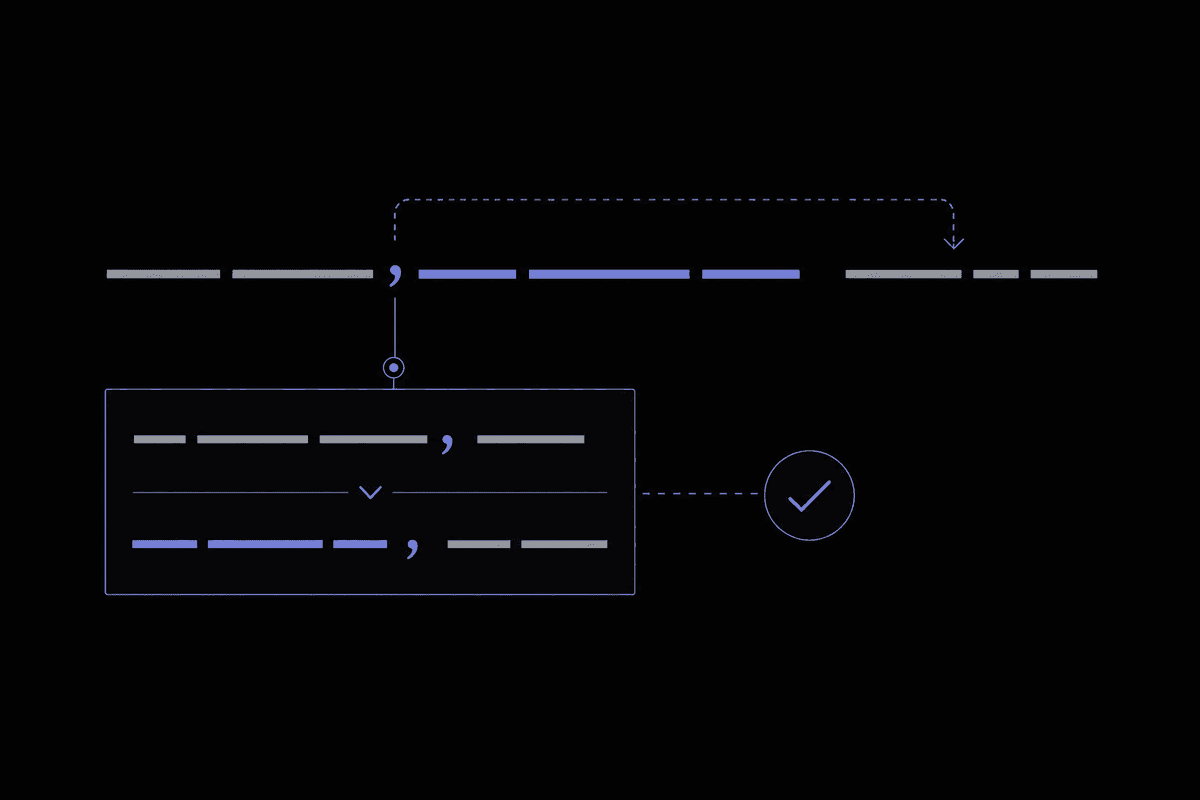
Dangling modifiers silently sabotage your writing credibility. Learn what they are, how to spot them, and 4 strategies to fix them fast.
A dangling modifier is a phrase or clause that doesn't logically connect to the subject of the main sentence, often producing unintentionally absurd meanings. Unlike misplaced modifiers, which have a subject but put it in the wrong spot, dangling modifiers are missing their intended subject entirely. You can fix them by rewriting the main clause to name the doer, embedding the subject inside the modifier, or restructuring the sentence from scratch. Catching these errors before you publish protects your credibility and keeps readers focused on what you actually mean.
What is a Dangling Modifier?
A dangling modifier is a descriptive phrase or clause that has no clear, logical subject to attach to in the sentence. Because the word or phrase it was meant to describe is absent from the main clause, the modifier ends up "dangling" — grammatically unmoored and often attaching itself to the wrong noun entirely. The result is a sentence that either sounds absurd or quietly misleads the reader.
Picture this: you're editing a colleague's report and you hit a sentence that stops you cold — not because it's unclear, exactly, but because it seems to say the coffee finished the paperwork. That's a dangling modifier at work. These errors are among the most persistent grammar problems in everyday writing, partly because they slip through spell-checkers and even some grammar tools undetected. Understanding why they break down is the first step toward catching them reliably.
The classic structure works like this: an introductory phrase sets up an action or condition, and then the main clause fails to deliver the person or thing actually performing that action. The modifier doesn't find its intended target, so it latches onto whatever subject is nearest — which is almost never the right one.
Three clear examples show the problem in action:
- Dangling: "After finishing the report, the coffee was still hot." The introductory phrase "after finishing the report" implies someone finished it. But the main clause names the coffee as the subject. Coffee doesn't write reports. The modifier dangles because the person who wrote the report is never mentioned.
- Dangling: "Walking through the park, the flowers smelled wonderful." The opening phrase implies a walker. But the main clause gives us flowers as the subject. Flowers don't walk. The actual walker — presumably a person — is nowhere in the sentence.
- Dangling: "Having read the final chapter, the ending was disappointing." "Having read" requires a reader. The main clause delivers an ending. Endings don't read. The human reader has been left out entirely.
In each case, the modifier dangles because the subject it needs — the person performing the action described in the opening phrase — simply isn't present in the main clause. That's the defining feature: the intended subject is missing, not just misplaced.
Are dangling modifiers always errors? Not entirely. The Australian Government Style Manual notes that a dangling modifier is only truly problematic "when the implied subject is different from the subject of the main clause." When context makes the intended subject obvious — such as in instructions where "you" is clearly implied — some style guides accept the construction. Grammar Monster similarly points out that "most dangling modifiers are not mistakes if the thing modified is obvious." That said, in formal writing, business communication, and academic work, the safe and professional choice is always to name the subject explicitly.
One mistake writers make is assuming that a long, flowing introductory phrase sounds more sophisticated. Sometimes it does. But if that phrase sets up an action and the main clause forgets to name who performed it, sophistication quickly turns into confusion. Keeping the doer visible is almost always the cleaner choice.
If you want to check how these errors affect the readability of a full passage, running your text through a Readability Checker can help you spot sentences dragging down your clarity score — dangling modifiers are a frequent contributor.
A dangling modifier occurs when the subject of an introductory phrase is missing from the main clause, causing the modifier to attach to the wrong noun and produce a logically absurd sentence.
What is the Difference Between a Dangling Modifier and a Misplaced Modifier?
A dangling modifier is missing its intended subject entirely — the word it should describe simply isn't in the sentence. A misplaced modifier has a subject present, but the modifier is positioned too far away from it, causing the sentence to imply the wrong relationship between words. Both create confusion, but they do so in distinctly different ways.
This is one of the most common points of confusion in grammar discussions, and it's easy to see why. Both errors involve modifiers behaving badly. But the distinction matters because the fix for each is different.
Think of it this way: a misplaced modifier is like a label stuck on the wrong box. The right box is somewhere in the room — the label just landed in the wrong spot. A dangling modifier is like a label with nowhere to go because the box it belongs to was never delivered.
Here's a side-by-side comparison to make this concrete:
| Error Type | Example Sentence | The Problem | Corrected Version |
|---|---|---|---|
| Misplaced Modifier | "She almost drove her kids to school every day." | "Almost" modifies "drove" but should modify "every day." She did drive them; she just didn't do it every day. | "She drove her kids to school almost every day." |
| Misplaced Modifier | "John hit the man with the cream cake." | Did John use the cream cake as a weapon, or did he hit a man who happened to be holding one? | "Using the cream cake, John hit the man." or "John hit the man who was holding the cream cake." |
| Dangling Modifier | "After finishing the homework, the TV was turned on." | Who finished the homework? The TV certainly didn't. The subject of "finishing" is absent. | "After finishing the homework, she turned on the TV." |
| Dangling Modifier | "Walking through the park, the squirrels chattered noisily." | The squirrels are doing the walking, according to this sentence. The human walker is missing. | "Walking through the park, Sarah heard the squirrels chattering noisily." |
| Misplaced Modifier | "We only eat pizza on Fridays." | "Only" should sit closer to "on Fridays" to clarify that Friday is the limitation, not pizza. | "We eat pizza only on Fridays." |
| Dangling Modifier | "To improve your writing, practice is essential." | "To improve your writing" implies a person who wants to improve. The subject of the main clause is "practice," not a person. | "To improve your writing, you need to practice consistently." |
The key diagnostic question is: does the subject the modifier needs actually appear in the sentence? If yes, but it's in the wrong place, you have a misplaced modifier. If no — if that subject is nowhere to be found — you have a dangling modifier.
Can one sentence contain both types of errors at once? Technically, yes, though it's rare. You could have a modifier that's both wrongly positioned and attached to a subject that doesn't quite make logical sense. In practice, editors tend to treat such sentences as needing a full rewrite rather than a targeted fix.
Misplaced modifiers tend to create ambiguity. Dangling modifiers tend to create absurdity. That's a useful rule of thumb. When a sentence makes you picture something impossible — squirrels taking a stroll, or coffee finishing a report — you're almost certainly looking at a dangler.
What Are the Most Common Dangling Modifier Mistakes?
The most common dangling modifier mistakes appear in introductory participial phrases, infinitive phrases, and prepositional phrases where the writer assumes the reader will infer the missing subject. These errors show up regularly in business emails, blog posts, and academic writing, often because writers draft quickly and forget to check whether the opening phrase actually connects to the main clause's subject.
Knowing the patterns is half the battle. Once you recognize what a dangling modifier looks like in the wild, you start noticing them everywhere — in marketing copy, news headlines, professional reports, and social media posts. Here are ten real-world examples drawn from common writing contexts, along with corrections and explanations.
1. Business email: "Having reviewed the proposal, the next steps are clear."
Problem: Who reviewed the proposal? The next steps didn't.
Fix: "Having reviewed the proposal, the team agreed on the next steps."
2. Blog post intro: "To write a great headline, clickbait tactics should be avoided."
Problem: "To write" implies a writer. "Clickbait tactics" can't write anything.
Fix: "To write a great headline, you should avoid clickbait tactics."
3. Academic paper: "After analyzing the data, significant trends were observed."
Problem: Who analyzed the data? The trends didn't do the analyzing.
Fix: "After analyzing the data, the researchers observed significant trends."
4. Job posting: "When applying for this position, a cover letter is required."
Problem: A cover letter isn't applying for a position — a candidate is.
Fix: "When applying for this position, candidates must submit a cover letter."
5. News headline: "Found wandering the streets, police took the dog to the shelter."
Problem: It reads as though the police were wandering the streets.
Fix: "After finding the dog wandering the streets, police took it to the shelter."
6. Product description: "Designed for professionals, the ergonomics improve posture instantly."
Problem: "Designed for professionals" needs a product as its subject. "The ergonomics" doesn't fill that role logically.
Fix: "Designed for professionals, this chair improves posture instantly."
7. Social media caption: "Celebrating five years in business, our customers mean everything to us."
Problem: Are the customers celebrating five years in business? Not necessarily.
Fix: "As we celebrate five years in business, we want to say our customers mean everything to us."
8. Academic thesis: "By examining three case studies, it becomes clear that the theory holds."
Problem: "It" is an impersonal subject that can't do the examining. This is a borderline case — some style guides allow it — but in formal academic writing, naming the examiner is cleaner.
Fix: "By examining three case studies, we can see that the theory holds."
9. Marketing brochure: "After years of research, our formula is finally here."
Problem: The formula didn't conduct the research. The company did.
Fix: "After years of research, our scientists developed a formula that is finally here."
10. Press release: "As a leading provider of cloud solutions, businesses trust our platform."
Problem: "Businesses" is the subject of the main clause, but businesses aren't the leading provider — the company writing the press release is.
Fix: "As a leading provider of cloud solutions, we have earned the trust of businesses worldwide."
One contrarian note worth making here: not every dangling modifier causes genuine confusion. According to style guidance from the Australian Government Style Manual (2026 edition), roughly 80% of dangling modifiers involve introductory phrases, and a subset of those are broadly accepted when the implied subject is "you," "I," or "one" and context makes this obvious. That said, in professional and academic writing, it's always safer to name the subject. Readers shouldn't have to do interpretive work just to follow a basic sentence.
As of 2026, AI writing assistants are generating more complex sentences than ever, and dangling modifiers are increasingly common in AI-produced content precisely because these tools sometimes drop the human subject from the sentence structure. If you use AI to help draft content, running the output through a Tone Analyzer and a thorough human edit is a smart safeguard.
Dangling modifier mistakes follow predictable patterns — introductory participial or infinitive phrases where the doer gets dropped from the main clause. Learning to recognize these ten common forms makes them much easier to catch before publishing.
How Do You Identify Dangling Modifiers in Your Writing?
To identify a dangling modifier, find the introductory phrase in your sentence, determine who or what is supposed to be performing the action described in that phrase, then check whether that subject actually appears as the subject of the main clause. If it doesn't, the modifier is dangling.
Identifying these errors in your own writing is harder than it sounds. When you wrote the sentence, you knew exactly what you meant — so your brain fills in the missing subject automatically. That's precisely why dangling modifiers survive the first draft and sometimes the second. The following three-step technique builds a habit that overrides that tendency.
Step 1: Find the Modifier
Look for introductory phrases at the start of a sentence, particularly those beginning with:
- A present participle: "Running," "Having finished," "Knowing that..."
- A past participle: "Exhausted by," "Defeated in," "Given the results..."
- An infinitive phrase: "To improve," "To avoid," "To complete..."
- A prepositional phrase: "After reading," "Before submitting," "While driving..."
Any sentence that opens with one of these constructions is a candidate for a dangling modifier check. Not all of them will be wrong — but all of them deserve a second look.
Step 2: Identify the Intended Subject
Ask yourself: who or what is actually performing the action described in that opening phrase? This is the intended subject. In "After finishing the report, the coffee was still hot," the intended subject is whoever finished the report — a person. Write that subject down mentally, or literally if it helps.
Step 3: Check Whether They Connect
Now look at the actual subject of the main clause — the noun right after the comma. Is it the same person or thing you identified in Step 2? If yes, you're fine. If no, you have a dangling modifier that needs fixing.
Here's the same logic laid out as a practical self-editing checklist:
- Scan for introductory phrases (participial, infinitive, or prepositional) before the main clause.
- Underline or highlight any phrase that describes an action or condition.
- Circle the subject of the main clause — the noun immediately following the comma.
- Ask: could this subject logically perform the action in the opening phrase? If not, flag it.
- Read the sentence aloud and ask whether it produces an absurd or confusing image.
- Check possessive constructions — "David's ambition drove the project forward, having worked late every night" is a subtle dangler that often goes unnoticed.
- Be especially careful after passive voice — passive constructions (e.g., "the report was submitted") frequently produce dangling modifiers because they remove the human actor from the sentence.
Can grammar tools catch these automatically? Some can. Grammarly and ProWritingAid both flag common dangling modifiers, though they miss context-dependent cases. A 2026 review of AI grammar tools found that automated tools catch approximately 60-70% of dangling modifiers in standard sentence structures, but complex or nuanced cases still require human judgment (ProWritingAid, 2026). Manual review using the three-step method above remains the most reliable approach.
One mistake writers make at this stage is relying entirely on reading for meaning rather than structure. When you proofread for meaning, your brain corrects errors automatically. Try reading only the introductory phrase and the first noun of the main clause in isolation. This structural check bypasses your brain's tendency to fill in the blanks — and it's surprisingly effective.
The Find and Replace tool can also be useful here — search for common participial openers like "Having," "Walking," "After," and "To" followed by a verb to quickly locate all the sentences in your draft that warrant a modifier check.
How to Fix Dangling Modifiers: 4 Rewriting Strategies
There are four reliable strategies for fixing a dangling modifier: rewrite the main clause so its subject matches the modifier, rewrite the modifier itself to include its own subject, add the missing subject to the main clause, or restructure the entire sentence to eliminate the introductory phrase. The right choice depends on which version reads most naturally in context.
Knowing you have a dangling modifier is one thing. Knowing how to fix it cleanly is another. The good news is that once you identify the problem, repairing it almost always produces a clearer and more direct sentence. Here are the four methods, each with a concrete before-and-after example.
Strategy 1: Rewrite the Main Clause
This is the most common fix. Keep the introductory phrase as it is, but change the subject of the main clause to the person or thing that logically performs the opening action.
Before: "Having studied all night, the exam felt manageable."
After: "Having studied all night, Maria found the exam manageable."
The opening phrase stays intact. The main clause now names Maria, the person who actually did the studying. Clean, direct, solved.
Strategy 2: Rewrite the Modifier
Instead of changing the main clause, convert the introductory phrase into a full subordinate clause by adding the subject and a verb directly into the modifier itself.
Before: "After finishing the report, the coffee was still hot."
After: "After she finished the report, the coffee was still hot."
Now the modifier has its own subject ("she"), so there's no need for the main clause to supply one. This approach works especially well when the main clause subject is genuinely different from the person performing the opening action.
Strategy 3: Add the Missing Subject
Sometimes the simplest fix is inserting the missing subject into the main clause where a passive or impersonal construction left a gap.
Before: "To improve writing clarity, active voice should be used."
After: "To improve writing clarity, writers should use active voice."
Purdue OWL describes this method directly: "The doer must be the subject of the main clause that follows." Adding the doer explicitly is the most straightforward resolution in most cases.
Strategy 4: Restructure the Sentence Entirely
When the first three approaches produce awkward or stilted results, scrapping the introductory phrase and rebuilding the sentence from scratch is often the best path. This is particularly useful when the modifier construction wasn't necessary in the first place.
Before: "Walking through the park, the squirrels chattered noisily."
After: "As she walked through the park, she could hear squirrels chattering noisily."
Or even more cleanly: "The squirrels chattered noisily as she walked through the park."
This version eliminates the modifier entirely and restructures the information as two equal clauses. No danglers, no ambiguity.
One thing editors frequently note: Strategy 1 tends to produce the most natural-sounding results in business and conversational writing, while Strategy 2 works better in formal and academic contexts where the main clause subject needs to remain specific. The choice comes down to rhythm and register, not just grammar.
After applying any of these fixes, paste your revised sentence into the Writing Workspace (free word counter) tool to check your sentence length — rewrites sometimes produce unexpectedly long constructions that hurt readability.
Fixing dangling modifiers almost always produces shorter, clearer sentences. The most reliable method is to make the modifier's intended subject the subject of the main clause — everything else follows from that correction.
What Are Squinting Modifiers and How Are They Different?
A squinting modifier is a word or phrase positioned between two sentence elements so that it could logically modify either the element before it or the element after it, creating genuine ambiguity about the writer's intended meaning. Unlike dangling modifiers, squinting modifiers have a subject — the problem is that they could plausibly belong to two different parts of the sentence at once.
The name is a useful image: a squinting modifier looks both ways at once, and the reader doesn't know which direction it's actually facing. These are sometimes called "two-way modifiers," and while they're less commonly discussed than dangling modifiers, they create confusion that's just as real.
The most common culprit is the word "only," though adverbs like "often," "almost," "just," and "frequently" cause the same problem when placed carelessly in the middle of a sentence.
Squinting example: "Students who practice writing often improve significantly."
Does "often" modify "practice" (students who often practice) or "improve" (students who improve often)? The sentence is genuinely ambiguous. A reader has to guess.
Fixed version A: "Students who often practice writing improve significantly."
Fixed version B: "Students who practice writing improve significantly more often than those who don't."
Another classic squinting example: "Eating quickly can cause indigestion." Here, "quickly" might describe the eating or the onset of indigestion. Context usually resolves this one, but it's the same structural ambiguity.
Here's where squinting modifiers differ from dangling ones in a practical sense: a dangling modifier produces an absurd or logically impossible reading. A squinting modifier produces two plausible readings. That makes squinters arguably more dangerous in technical and academic writing, where precision matters and readers may genuinely take the sentence in the wrong direction without realizing it.
The fix is straightforward: move the modifier so it sits unambiguously next to the element it's meant to describe. In most cases, relocating the adverb is all it takes. If relocation still leaves doubt, restructure the sentence to make the relationship explicit.
Do grammar checkers catch squinting modifiers? Less reliably than dangling ones. As of 2026, most major grammar tools flag dangling modifiers with higher accuracy than squinting modifiers, partly because squinting modifiers are technically grammatical — just ambiguous (ProWritingAid, 2026). Human editing remains the only reliable detection method for two-way ambiguity.
Dangling Modifiers in Everyday Writing: Why They Matter
Dangling modifiers matter because they force readers to pause, re-read, and interpret what the writer actually meant — and in professional contexts, that pause costs credibility. They also reduce readability scores, undermine the writer's authority, and in high-stakes writing like legal documents or medical instructions, they can create genuine misunderstandings.
It's tempting to dismiss modifier errors as minor stylistic hiccups. They're not. Here's why they carry real weight in practical writing contexts.
Readability takes the first hit. Every time a reader encounters a sentence that implies the coffee wrote the report or the squirrels took a walk, cognitive load spikes. The reader has to stop, back up, and reconstruct what was meant. Research cited by the Nielsen Norman Group suggests that readers spend only 20-28% of their time actually reading web content closely, which means any sentence that demands re-reading is a sentence that risks being abandoned entirely (Nielsen Norman Group, 2024). Modifier errors accelerate that abandonment.
Credibility takes the next hit. In business writing, a dangling modifier signals carelessness. A client reading a proposal that says "Having analyzed your financial needs, the investment strategy is straightforward" may not consciously identify the modifier error, but they'll register something slightly off. That subtle friction adds up across a document. A 2025 survey by the Content Marketing Institute found that 59% of B2B buyers said writing quality directly influenced their trust in a vendor's expertise (Content Marketing Institute, 2025). Grammar errors are part of that quality signal.
In technical and legal writing, the stakes are even higher. An instruction manual that reads "To install correctly, the bracket must face upward" leaves unclear who should do the installing. A contract clause that says "After reviewing the terms, the agreement becomes binding" fails to specify who reviewed the terms. These aren't just awkward sentences — they're potential liabilities.
Academic writing has its own version of this problem. Dangling modifiers weaken the writer's authority, and peer reviewers notice them. The Purdue OWL explicitly states that in academic prose, "the doer must be the subject of the main clause that follows" — there's no wiggle room for implied subjects in formal scholarly writing.
One contrarian view worth acknowledging: in informal writing, advertising copy, and some conversational blog posts, a dangling modifier occasionally slips through without causing real harm. "Speaking of deals, this weekend's sale is unmissable" dangles technically but nobody is confused by it. The acceptable-dangler zone is real. It's also narrow, and defaulting to grammatical precision is always the safer practice.
As of 2026, AI-generated content is making modifier errors more common across the web, not less. AI tools generate fluent-sounding prose but often drop the human subject from a sentence, producing perfectly grammatical danglers that pass automated checks. If your publishing workflow includes AI assistance, building a manual modifier check into your editing process is no longer optional — it's a basic quality control step.
Quick Editing Checklist for Modifier Errors
A systematic editing checklist for modifier errors combines targeted search techniques with manual sentence-level review. The goal is a repeatable process that catches both dangling and misplaced modifiers before a piece is published, without requiring a complete re-read of the entire document every time.
This checklist is designed to be used after your first full draft is complete. It won't replace deep editing, but it will catch the majority of modifier problems efficiently.
Phase 1: Search-Based Scan
- Search for participial openers. Use Find and Replace to locate sentences beginning with common participial triggers: "Having," "Being," "Running," "Walking," "Knowing," "Seeing," "Thinking," "Feeling." Review each sentence using the three-step identification method.
- Search for infinitive openers. Look for sentences beginning with "To" followed by a verb (e.g., "To improve," "To avoid," "To complete"). Check whether the main clause subject is the logical doer of that action.
- Search for prepositional phrase openers. Common culprits: "After," "Before," "While," "When," "Upon," "By," "As." Flag and review each one.
- Search for "only," "almost," "just," "frequently," "often." Check whether these adverbs are squinting between two sentence elements.
Phase 2: Manual Review
- Read each flagged sentence aloud. If it produces a logically absurd image, it's likely a dangler. If it seems ambiguous, it may be a squinting modifier.
- For each introductory phrase, ask: "Who or what is doing this?" Then check whether that person or thing is the subject of the main clause.
- Check all passive voice constructions. Passive sentences (those containing "was," "were," "is," "are" plus a past participle) are frequent dangler hotspots because they remove the actor from the sentence.
- Check possessive subjects. "David's commitment to the project, having worked tirelessly, was evident" is a subtle dangler. If the subject is a possessive noun, make sure the modifier logic still holds.
Phase 3: Readability and Final Check
- Run the revised text through a Readability Checker. Sentences with modifier errors often register as complex or hard-to-follow in readability analysis.
- Check that your fixes didn't create new problems. A rewritten sentence can accidentally introduce a misplaced modifier or a squinter if you're not careful.
- Do one final read-aloud pass. Your ear will catch awkward constructions that your eye skipped.
- If you used AI to draft any portion of the content, give modifier checks extra attention in those sections. AI-generated prose has a notable tendency to drop human subjects and produce passive constructions that dangle.
One common mistake at this stage: treating a grammar tool's silence as a green light. Tools catch many modifier errors, but they miss nuanced or context-dependent cases. The checklist above is specifically designed to go beyond what automated tools cover. According to Grammarly's 2025 Workplace Communication Report, grammar errors — including modifier problems — are among the top five issues flagged in professional business writing, suggesting that even in high-stakes contexts, these errors remain stubbornly common (Grammarly, 2025).
Building this checklist into your regular editing workflow takes about five extra minutes per piece. That's a reasonable investment when a single dangling modifier in a headline or opening paragraph can undermine the credibility of an otherwise strong piece of writing.
Frequently Asked Questions
What is a dangling modifier in simple terms?
A dangling modifier is an introductory phrase that doesn't logically connect to the subject of the main clause. For example, "After eating lunch, the meeting started" implies the meeting ate lunch, because the person who actually did the eating is never mentioned. The fix is to add the missing subject: "After eating lunch, we started the meeting."
What are some easy dangling modifier examples to remember?
Three clear examples: "Walking to school, the rain started" (rain doesn't walk), "Having read the letter, the cat was confused" (cats don't read letters), and "To succeed in business, hard work is required" (hard work doesn't succeed — people do). Each one is memorable because it produces an absurd image when read literally. Noticing that absurdity is the fastest way to spot a dangler in your own writing.
What is the difference between a dangling modifier and a misplaced modifier?
A dangling modifier is missing its intended subject entirely — the word it should describe simply isn't in the sentence. A misplaced modifier has a subject present, but the modifier is positioned too far from it, creating ambiguity. For example, "Only Sarah eats pizza on Fridays" (misplaced "only") vs. "After eating pizza, the movie started" (dangling — who ate the pizza?). Dangling modifiers tend to produce absurdity; misplaced modifiers tend to produce ambiguity.
How do you fix a dangling modifier?
There are four main strategies: rewrite the main clause to name the logical doer as its subject, rewrite the modifier to include its own subject and verb, insert the missing subject directly into the main clause, or restructure the sentence entirely to eliminate the introductory phrase. The most common and natural-sounding fix is the first option: make the person performing the opening action the subject of the main clause.
Are dangling modifiers always grammar errors?
Not always. In informal writing and some instructional contexts, dangling modifiers with clearly implied subjects — such as "To open, press the button" — are widely accepted and rarely cause confusion. However, in formal business writing, academic papers, legal documents, and professional content, the convention is to name the subject explicitly. When in doubt, add the subject and eliminate the ambiguity entirely.
Can grammar checkers detect dangling modifiers automatically?
Grammar tools like Grammarly and ProWritingAid do flag many common dangling modifiers, but as of 2026, automated tools catch roughly 60-70% of danglers and frequently miss context-dependent or complex cases. Tools are most reliable for simple participial phrase danglers and least reliable for infinitive phrases or sentences with possessive subjects. Manual review using a structured checklist remains the most dependable method for catching all modifier errors.
What is a squinting modifier and how does it differ from a dangling modifier?
A squinting modifier is positioned between two parts of a sentence so it could logically modify either one, creating genuine ambiguity — for example, "Students who practice writing often improve" (does "often" modify practicing or improving?). Unlike a dangling modifier, a squinting modifier does have a subject; the problem is that it faces two directions at once. The fix is to move the modifier so it sits unambiguously next to the element it describes.
Why do dangling modifiers appear so often in AI-generated writing?
AI writing tools generate grammatically plausible sentences by predicting likely word sequences, but they don't always maintain logical consistency between an introductory phrase and the main clause subject. This means they frequently produce passive constructions and impersonal subjects that cause the modifier's intended actor to disappear from the sentence. As of 2026, this is a known limitation of AI writing assistants, and any content produced with AI assistance should receive a dedicated modifier check during the editing phase.
This article was drafted with AI assistance, fact-checked against primary sources, and reviewed by our editorial team before publishing. How we use AI.