

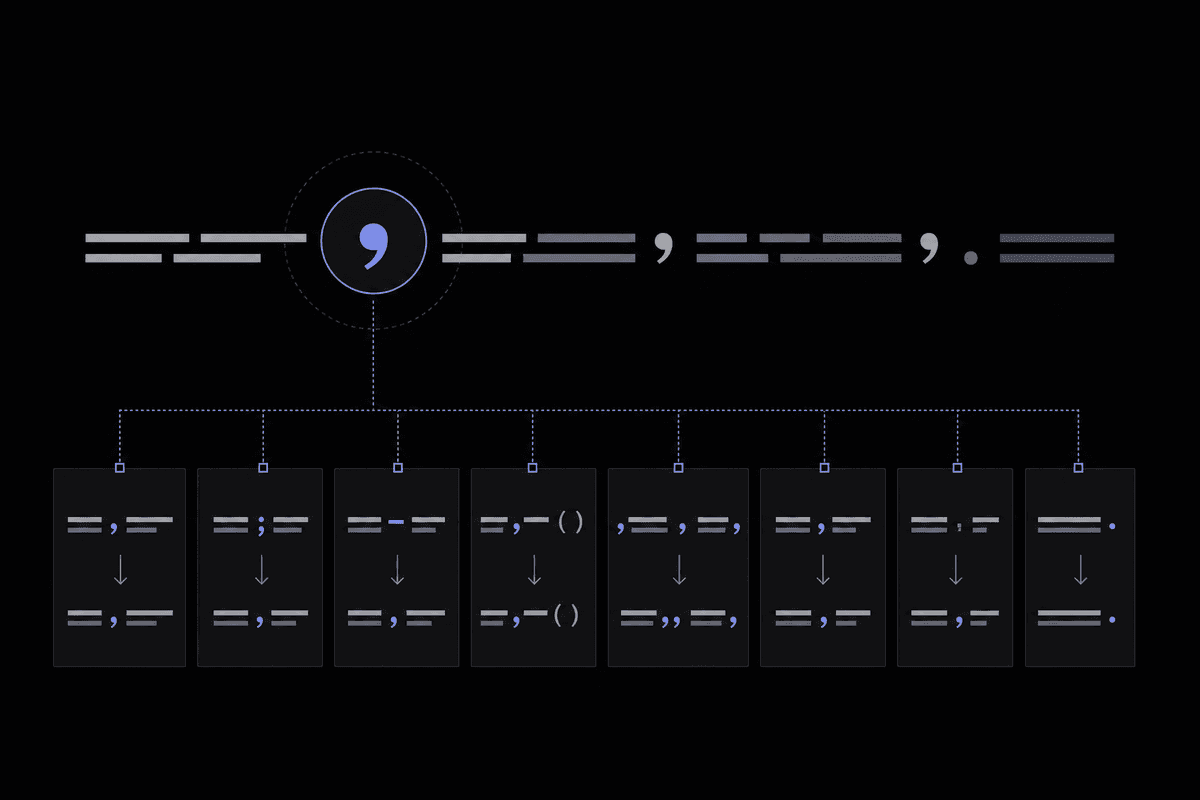
Confused about commas? Learn all 8 essential comma usage rules with clear examples, common mistakes, and an easy cheat sheet to sharpen your writing fast.
Why Comma Rules Matter for Clear Writing
You've probably seen the famous example before, but it never gets old: "Let's eat, Grandma" versus "Let's eat Grandma." One comma is the only thing standing between a dinner invitation and a horror story. That's not a grammar pedant's party trick. That's a real demonstration of how a single punctuation mark controls meaning, tone, and reader trust.
Here's the thing: most writing problems aren't about vocabulary or sentence structure. They're about punctuation. Misplaced commas make readers stumble, re-read sentences twice, and sometimes walk away with entirely the wrong idea. For bloggers, students, and professional writers, that friction is costly. Studies on readability consistently show that well-punctuated text reduces cognitive load, which means readers stay engaged longer and comprehend more accurately.
I've seen this go wrong in professional settings more times than I can count. A marketing email with a comma splice reads as rushed and careless. A student essay that never uses commas after introductory clauses feels breathless and hard to follow. A legal document with ambiguous list punctuation can literally cost money in disputes over meaning. The stakes are real, whether you're writing a text message or a thesis.
What makes comma usage genuinely tricky is that there are multiple rules, and they apply in different situations. It's not one thing you learn once. It's a small toolkit you build over time. That's exactly what this guide is designed to give you. We'll cover all eight essential comma usage rules with examples, explain the controversies worth knowing about, and give you practical tools to audit your own writing.
A common myth worth busting right now: you should place a comma wherever you'd naturally pause when speaking. That's not a rule. It's a feeling. And feelings make inconsistent editors. Actual comma rules are based on grammatical structure, not breath patterns. By the time you finish reading this, you'll have a clear, structural understanding of when to use a comma, when to skip it, and when a different punctuation mark is the better call entirely.
One more thing before we get into it: commas are among the most frequently misused punctuation marks in written English. According to Grammarly's writing data, comma errors consistently rank among the top five most common grammar mistakes detected across millions of documents. That tells you something important: nearly everyone struggles with this, and getting it right genuinely sets your writing apart.
Rule 1: Commas in Lists (and the Oxford Comma Debate)
When you list three or more items in a sentence, you separate them with commas. That part is straightforward and almost universally agreed upon. The controversy starts at the very end of the list, with one small comma that has somehow sparked decades of editorial debate: the Oxford comma, also called the serial comma.
The Oxford comma is the comma placed before the final coordinating conjunction in a list. Consider these two versions:
- Without Oxford comma: I need eggs, milk and butter.
- With Oxford comma: I need eggs, milk, and butter.
In that grocery list, both versions are perfectly clear. No ambiguity, no problem. But now look at a sentence where the Oxford comma actually changes the meaning:
- Without: I'd like to thank my parents, Oprah Winfrey and the Pope.
- With: I'd like to thank my parents, Oprah Winfrey, and the Pope.
Without the Oxford comma, the sentence reads as though Oprah Winfrey and the Pope are the writer's parents. The comma before "and" eliminates that absurd reading entirely. This is not a contrived example for grammar class. In 2017, a real legal dispute in Maine turned on the absence of a serial comma in state overtime law. Dairy drivers won a lawsuit worth potentially millions of dollars partly because of missing comma clarity in a list of exemptions. A single comma.
So where do the major style guides land on this? The Chicago Manual of Style and APA style both recommend using the Oxford comma consistently. AP Style, used widely in journalism, traditionally omits it unless needed for clarity. MLA sits somewhere in the middle. My recommendation: use it always. The cost of including it is zero. The cost of omitting it when it matters can be significant.
The basic rule for list commas is this: separate each item with a comma, and don't skip the one before the final conjunction. Here are a few examples showing the rule in action across different list types:
- She packed a notebook, two pens, a charger, and a water bottle. (four items, serial comma included)
- The report covered sales, marketing, and customer retention. (three items)
- He was tall, quiet, and oddly well-dressed for a Tuesday. (three adjectives acting as a list)
One common mistake I see often: adding a comma after the final item in a list, before the verb. Like this: "Eggs, milk, and butter, are on the list." That trailing comma before "are" is wrong. It creates an unnecessary pause between the subject and the verb. List commas belong between items, not after the last one.
Another version of this mistake is treating two-item combinations as lists: "I like coffee, and tea." Two items joined by "and" don't need a comma between them unless they're independent clauses. "I like coffee and tea" is correct. Simple, clean, no comma needed.
When you're editing a long document and need to check for consistent list punctuation, a tool like Find and Replace can help you search for specific patterns, like instances of "and" preceded by no comma, so you can review them quickly rather than scanning every sentence by hand.
Rule 2: Commas Before Coordinating Conjunctions
This rule trips up even experienced writers because it comes with a condition that's easy to forget. Yes, you use a comma before a coordinating conjunction. But only when that conjunction is joining two independent clauses. That condition changes everything.
First, let's lock in the coordinating conjunctions. They're remembered with the acronym FANBOYS: For, And, Nor, But, Or, Yet, So. These seven words connect elements of equal grammatical weight. When they connect two full, standalone sentences (independent clauses), a comma comes before them. When they connect smaller elements like two nouns or two verbs, no comma is needed.
Here's how that plays out in practice:
- Comma needed (two independent clauses): She finished the report, and her manager approved it immediately.
- No comma (shared subject, two verbs): She finished the report and submitted it before noon.
- Comma needed: He wanted to stay, but the last train was leaving in ten minutes.
- No comma: He wanted to stay but couldn't afford another night.
The test is simple: cover up everything before the conjunction. Then cover up everything after it. Does each half form a complete sentence on its own? If yes to both, you need the comma. If either half can't stand alone, skip it.
The most common error here is adding a comma before "and" or "but" out of habit, even when the second clause doesn't have its own subject. "She worked late, and finished the project" is wrong because "finished the project" isn't a standalone sentence. It shares a subject with the first clause. Drop the comma: "She worked late and finished the project."
The opposite mistake also happens: writers omit the comma when two full independent clauses are joined. "The deadline passed and no one had submitted a draft" is technically a run-on. It needs the comma: "The deadline passed, and no one had submitted a draft."
One genuine gray area: very short independent clauses. Some style guides allow you to drop the comma when both clauses are brief and the meaning is crystal clear. "She laughed and he smiled" is often acceptable in informal writing. That said, I'd recommend using the comma consistently until you have a strong instinctive feel for when omitting it genuinely aids flow rather than just saving a keystroke.
According to Purdue OWL, one of the most-referenced writing guides in academic settings, the comma-before-coordinating-conjunction rule is one of the most frequently violated in student writing. The fix is always the same: check whether both sides of the conjunction can stand alone as sentences. If they can, the comma earns its place.
Rule 3: Commas After Introductory Elements
This is probably the rule that improves writing most visibly once you start applying it consistently. When a sentence begins with something other than the main subject, you almost always need a comma before that main clause begins. The introductory element can be a single word, a short phrase, or a full dependent clause. The comma signals to the reader: the setup is done, here comes the main point.
Let's break this into categories with examples, because introductory elements come in several forms:
Introductory dependent clauses: These begin with subordinating conjunctions like "although," "because," "when," "if," "since," or "after." They can't stand alone as sentences.
- Although the meeting ran long, everyone stayed until the decision was made.
- Because the server crashed overnight, all unsaved work was lost.
- When she finally arrived at the station, the last train had already left.
Introductory prepositional phrases: These typically start with words like "after," "before," "during," "in," "on," or "with." The Purdue OWL guidance suggests using a comma after phrases of four or more words; shorter phrases may or may not need one depending on clarity.
- After a long and difficult negotiation, both parties signed the contract. (comma needed)
- In 2021, the policy changed significantly. (comma aids readability)
- On Tuesday he called back. (very short; comma optional but acceptable)
Introductory participial phrases: These begin with a verb form acting as a modifier.
- Exhausted from the climb, she sat down without saying a word.
- Having reviewed all the applications, the committee made its final choice.
Introductory adverbs and transitional words: Single words like "However," "Nevertheless," "Finally," "Unfortunately," and "Meanwhile" that open a sentence need a comma after them.
- However, the results told a different story.
- Finally, someone raised the question everyone had been avoiding.
What most people miss is the flip side of this rule: when the dependent clause comes at the end of a sentence rather than the beginning, you usually don't need a comma. "Everyone stayed until the decision was made, although the meeting ran long" reverses the clause order, and in most cases, no comma is needed before "although" there.
A common mistake I've caught in my own drafts: forgetting the comma after a long introductory phrase because I was mentally focused on the main clause. Reading the sentence aloud helps. If you hit the main verb and feel like you stumbled into it without warning, a comma was probably missing. Use the Writing Workspace (free word counter) to paste in your text and review sentences for length and structure, which can help you spot dense passages where introductory elements may be getting lost.
Rules 4–6: Commas With Nonessential Clauses, Appositives, and Direct Address
These three rules belong together because they all involve the same core idea: when you insert extra information into a sentence that isn't strictly necessary for the sentence's meaning, you set it off with commas. Remove the commas and the inserted element, and the sentence should still make complete grammatical sense.
Nonessential (Nonrestrictive) vs. Essential (Restrictive) Clauses
This is a distinction that confuses writers at every level, and getting it wrong changes the meaning of your sentence in ways you might not notice until someone points it out.
A restrictive clause is essential to identifying which person or thing the sentence is about. No commas. A nonrestrictive clause adds extra information about something already clearly identified. Commas required.
- Restrictive (no commas): The student who studied hardest earned the scholarship. (The clause "who studied hardest" is essential. Remove it and you don't know which student.)
- Nonrestrictive (commas needed): Maria, who studied hardest, earned the scholarship. (Maria is already identified by name. The clause is bonus information.)
The words "which" and "that" follow a similar pattern. "That" typically introduces essential clauses; "which" introduces nonessential ones and gets commas. "The laptop that I borrowed stopped working" versus "My laptop, which I bought last year, stopped working."
Appositives
An appositive is a noun phrase placed next to another noun to rename or describe it. When the appositive is nonessential (meaning it's giving extra information rather than identifying the noun), it gets commas on both sides.
- My colleague, a former editor at a national newspaper, reviewed the draft. (nonessential; "my colleague" is already identified)
- The author Stephen King has written over sixty novels. (essential; "Stephen King" tells you which author)
The test: remove the appositive and ask whether the sentence still clearly identifies what it's talking about. If yes, use commas. If removing it creates confusion about who or what you mean, skip the commas.
Direct Address (Vocative Commas)
When you address someone by name or title directly in a sentence, that name gets set off by commas. This is the rule behind "Let's eat, Grandma." The comma separates the action from the person being addressed.
- James, can you send me the file?
- I appreciate your help, Dr. Patel.
- Thank you, everyone, for attending today.
Omitting the vocative comma changes the meaning entirely in some sentences. "Let's go, students" is an instruction to students. "Let's go students" reads as though you're planning to take the students somewhere, or it just sounds grammatically broken. The comma does important work here with very little effort.
One mistake I see in email writing constantly: people drop the vocative comma in greetings. "Hi Sarah" should technically be "Hi, Sarah". In casual emails, this is widely forgiven. In formal correspondence, the comma matters.
Rules 7–8: Commas in Dates, Addresses, and Quotations
These rules cover formatting conventions that come up constantly in everyday writing: journalism, business correspondence, academic papers, and even social media posts. Getting them right signals attention to detail; getting them wrong looks sloppy in contexts where precision matters.
Commas in Dates
When writing a full date in the month-day-year format standard in American English, use a comma between the day and the year. When the date appears mid-sentence, also place a comma after the year.
- The event took place on July 4, 1776, and changed the course of history.
- She was born on March 15, 1990, in a small town in Oregon.
When you write only the month and year, no comma is needed: "The policy went into effect in January 2024." And when using the day-month-year format common in British English, no comma appears between the day and month: "The meeting is on 14 March 2025."
A common mistake is forgetting the comma after the year when the date falls mid-sentence. Writers naturally put the comma before the year and then forget the closing comma, treating the year as the end of the phrase when it's actually an interruption in the sentence's flow.
Commas in Addresses and Locations
When writing addresses within running text (not on an envelope), commas separate each element of the address. The same applies when naming geographic locations with multiple components, like city and state or city and country.
- She lives at 45 Maple Street, Portland, Oregon, and works downtown.
- The conference is held in Vienna, Austria, every other year.
- He grew up in Austin, Texas, before moving to New York.
Again, notice the comma after the final geographic element when the sentence continues. "She moved to Chicago, Illinois in 2019" is missing the comma after Illinois. The state name needs a closing comma just like the year in a date.
Commas With Quotations
When you introduce a direct quotation with a speech tag like "she said" or "he asked," use a comma before the opening quotation mark. When the speech tag follows the quotation, the comma goes inside the closing quotation mark.
- She said, "The deadline has been moved to Friday."
- "The deadline has been moved to Friday," she said.
- "We need to talk," he told her quietly, "about what happened last week."
When the quotation is not a direct speech tag but is instead introduced by "that" or is part of the sentence's flow, no comma is needed: "He argued that 'clarity is the highest virtue of writing' and nothing should obscure it."
One specific trap: using a comma when the quotation is actually a question or exclamation. "Are you coming?" she asked. The question mark inside the quotation marks replaces the comma. You don't write: "Are you coming?," she asked. The question mark does the job.
Common Comma Mistakes and How to Fix Them
Knowing the rules is half the battle. Knowing which rules people break most often, and why, is what actually sharpens your editing instincts. Let's go through the big ones with real comma splice examples and fixes, plus a checklist you can apply to your own drafts.
The Comma Splice
A comma splice happens when two independent clauses are joined by only a comma, with no coordinating conjunction. It's one of the most common errors in student writing and casual blogging.
- Comma splice: The presentation ran over time, the audience grew restless.
There are four clean ways to fix it:
- Add a coordinating conjunction: The presentation ran over time, and the audience grew restless.
- Use a semicolon: The presentation ran over time; the audience grew restless.
- Split into two sentences: The presentation ran over time. The audience grew restless.
- Use a subordinating conjunction: Because the presentation ran over time, the audience grew restless.
Each fix changes the relationship between the two ideas slightly. Choose based on the emphasis you want. The semicolon keeps them closely linked and equal. The coordinating conjunction shows they're related but distinct. The subordinating conjunction makes one idea dependent on the other.
Comma Between Subject and Verb
Never place a comma between a subject and its verb, no matter how long or complex the subject is.
- Wrong: The director of marketing and her entire team, approved the new campaign.
- Right: The director of marketing and her entire team approved the new campaign.
This error often happens when the subject is long. The writer reaches the verb and instinctively pauses, but that pause doesn't belong in print.
Unnecessary Comma in a Compound Predicate
As mentioned earlier, two verbs sharing a subject don't need a comma between them.
- Wrong: She opened the file, and read the first paragraph.
- Right: She opened the file and read the first paragraph.
Missing Comma After an Introductory Clause
- Wrong: After reviewing the feedback we made three significant changes.
- Right: After reviewing the feedback, we made three significant changes.
Self-Editing Checklist
Before submitting or publishing any piece of writing, run through this list:
- Does every list of three or more items have commas between each item, including before the final conjunction?
- Does every sentence starting with a dependent clause or long phrase have a comma after the introductory element?
- Does every compound sentence (two independent clauses joined by FANBOYS) have a comma before the conjunction?
- Is every nonessential clause or appositive set off with commas on both sides?
- Are dates and addresses formatted with the correct commas, including after the year or state when the sentence continues?
- Are there any comma splices? (Look for commas between two complete sentences with no conjunction.)
- Are there commas between subjects and verbs? (There shouldn't be.)
If you're editing a longer document, the Find and Replace tool at Tools for Writing can help you locate specific patterns, like every instance of a comma followed by "and," so you can check each one against the rules above without reading the entire document word by word. It's a genuinely practical shortcut for document-level editing.
Quick-Reference Comma Cheat Sheet
Bookmark this section. Print it out. Tape it to your monitor. Whatever helps. Here are all eight rules in one place, each with a single clear example so you can scan and apply quickly.
| Rule | When It Applies | Example |
|---|---|---|
| 1. Serial/List Comma | Three or more items in a series | She bought apples, oranges, and grapes. |
| 2. Oxford Comma | Before the final conjunction in a list | I thanked my editor, my agent, and my family. |
| 3. Coordinating Conjunction | Before FANBOYS joining two independent clauses | He finished early, but she was still working. |
| 4. Introductory Element | After an opening phrase, clause, or transition word | Although it rained, the game continued. |
| 5. Nonessential Clause | Around information that could be removed without changing core meaning | The report, which took three weeks, was well-received. |
| 6. Appositive/Direct Address | Around a renaming phrase or a name used in direct address | My dog, a golden retriever, loves the park. / Come here, Max. |
| 7. Dates and Addresses | Between parts of a date or address, including after the final element mid-sentence | She moved to Austin, Texas, in 2018. |
| 8. Quotations | Before and after speech tags in direct quotations | "Call me back," she said, "when you have time." |
When you're applying these rules to a real document and want to check for comma-related patterns systematically, the Find and Replace tool makes it easy to search for common trouble spots, like sentences where "however" appears without a following comma, or compound sentences where FANBOYS appear without a preceding comma. Pair it with the Writing Workspace (free word counter) to track document length and sentence-level statistics as you revise.
These eight rules won't cover every possible comma situation you'll ever encounter. English is too varied for that. But they cover the vast majority of cases you'll face in everyday writing. Master these, internalize the logic behind them rather than just memorizing the rules, and your writing will be noticeably cleaner, clearer, and more credible almost immediately.
Frequently Asked Questions
Do I always need a comma before "and"?
Not always. A comma before "and" is required when "and" joins two independent clauses in a compound sentence: "She finished the draft, and her editor approved it." When "and" simply connects two nouns, verbs, or adjectives without two full sentences on either side, skip the comma: "She wrote and edited the piece herself." The Oxford comma before "and" in a list is a separate rule and is generally recommended for clarity.
What is a comma splice, and how do I fix it?
A comma splice is when two independent clauses are joined by only a comma, with no coordinating conjunction. Example of a splice: "The store was closed, we went home." You can fix it by adding a conjunction ("The store was closed, so we went home"), using a semicolon ("The store was closed; we went home"), or splitting it into two sentences. Each fix has slightly different implications for emphasis and flow.
When should I use the Oxford comma?
The Oxford comma is the comma placed before the final item in a list: "red, white, and blue." While AP Style traditionally omits it, the Chicago Manual of Style and APA both recommend it. The safest approach for most writers is to use it consistently. The risk of ambiguity without it (as in the famous "my parents, Oprah and the Pope" example) far outweighs the minor visual addition of one extra comma.
Can I use a comma between a subject and its verb?
No. Placing a comma between a subject and its verb is always an error, regardless of how long or complex the subject is. "The manager and her team, approved the report" is incorrect. The comma should be removed entirely. This mistake often happens because the writer pauses mentally after a long subject, but that mental pause doesn't translate to a grammatical comma.
What's the difference between restrictive and nonrestrictive clauses for comma purposes?
A restrictive clause is essential to identifying what the sentence refers to and takes no commas: "The employee who arrived late missed the briefing" (the clause tells you which employee). A nonrestrictive clause adds extra information about something already clearly identified and needs commas on both sides: "Tom, who arrived late, missed the briefing." If removing the clause would make the sentence vague, it's restrictive. If removing it just removes bonus detail, it's nonrestrictive.
Do I need a comma after every introductory word like "However" or "Finally"?
Yes. Transitional adverbs and conjunctive adverbs that open a sentence, like "However," "Therefore," "Finally," "Nevertheless," and "Meanwhile," should be followed by a comma. "However, the results were inconclusive." This is different from when these words appear mid-sentence, where they get commas on both sides: "The results, however, were inconclusive."
How do I punctuate a date that appears in the middle of a sentence?
When a full month-day-year date appears mid-sentence, you need commas both before and after the year. "The contract was signed on October 3, 2023, and took effect immediately." Writers commonly forget the comma after the year. When you write only a month and year, no comma is needed: "The policy changed in March 2024 without announcement."
Is the "pause where you breathe" rule a reliable guide for comma placement?
No, and this is one of the most persistent comma myths worth letting go of. Breath patterns vary by speaker, reading speed, and emphasis style. Two people reading the same sentence aloud might pause in completely different places, neither of which corresponds to a grammatically correct comma. Comma placement should be based on grammatical structure: clause types, conjunction use, and the essential versus nonessential status of the information. Structure is consistent; breathing is not.
This article was drafted with AI assistance, fact-checked against primary sources, and reviewed by our editorial team before publishing. How we use AI.